Complete Guide to Ohio Online Casinos: Real Money Online Casinos, Legal Insights and Top Bonuses
Legal Status of Online Gambling in the US and Ohio

Casino gambling is illegal in Ohio!
Online gambling in the United States is regulated primarily at the state level rather than through a single nationwide law. While there is no federal statute that outright legalizes or bans online gambling across the country, federal legislation plays an important supporting role. The most influential law in this area is the Unlawful Internet Gambling Enforcement Act (UIGEA) of 2006. UIGEA does not make online gambling illegal for players. Instead, it restricts banks and payment processors from handling transactions tied to gambling activities that are illegal under applicable state laws. This framework gives individual states the authority to decide which forms of online gambling they want to legalize, regulate, or prohibit.
Over the past decade, several states—including New Jersey, Pennsylvania, and Michigan—have used this authority to establish fully regulated online casino and poker markets. These states license operators, enforce strict consumer protection standards, and collect significant tax revenue from online gambling. Their success has demonstrated that regulated iGaming can operate safely and transparently when supported by clear legislation and regulatory oversight.
Ohio has taken a more measured approach. The state has a well-established gambling industry that includes commercial casinos, racinos, a state lottery, and tribal gaming operations. However, Ohio has not legalized real-money online casinos or online poker. As of now, there is no Ohio-regulated system that allows players to legally wager on online slots, table games, or poker for real money under state law.
Sports betting, on the other hand, is legal in Ohio. Following the repeal of PASPA, Ohio passed legislation authorizing sports wagering, and the state officially launched legal online and retail sports betting in January 2023. Online sports betting is regulated by the Ohio Casino Control Commission and is available through licensed operators that meet state requirements for geolocation, identity verification, and responsible gambling protections. This makes sports betting the only form of real-money online gambling currently authorized and regulated in Ohio.
For Ohio residents interested in online casino-style gaming, legal alternatives are limited. Social casinos are permitted and operate using virtual currency for entertainment purposes only, with no option to cash out winnings. Sweepstakes-style casinos, which use promotional entry methods rather than direct wagering, are generally accessible in Ohio and operate under sweepstakes and promotional law rather than gambling statutes.
Some players in Ohio also access offshore online casinos that accept U.S. players. These platforms are based outside the United States and are not licensed or regulated by Ohio authorities. While they may offer real-money casino games, they operate outside Ohio’s legal and regulatory framework, meaning players have limited legal protections and recourse in the event of disputes or payment issues.
Looking ahead, Ohio’s successful rollout of legal sports betting has sparked ongoing discussions about whether the state could eventually expand into regulated online casinos or poker. With neighboring states generating substantial revenue from iGaming, Ohio may consider similar legislation in the future. For now, however, real-money online casinos remain unauthorized in Ohio, and online sports betting stands as the state’s only fully regulated form of online gambling.
Legal and Illegal Gambling Activities in Ohio
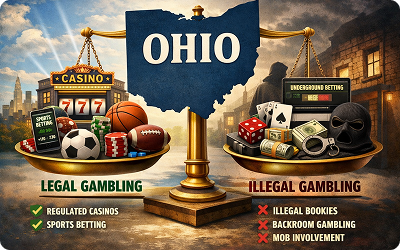
Ohio offers a wide range of legal gambling options, both in-person and online, but not all forms of gambling are permitted under state law. While the state has embraced regulated sports betting and maintains a strong land-based casino industry, real-money online casinos remain unauthorized. Understanding which gambling activities are legal and which are prohibited helps Ohio residents gamble responsibly and stay within the law.
Legal Gambling Activities in Ohio
Commercial Casinos
Ohio has four full-scale commercial casinos that are regulated by the Ohio Casino Control Commission (OCCC) and offer slot machines, table games, and poker rooms. Casino gambling in Ohio is limited to licensed venues, and players must be 21 years of age to participate.
Racinos
In addition to traditional casinos, Ohio operates several racinos—racetracks that offer video lottery terminals (VLTs) rather than live-dealer table games. These facilities are overseen by the Ohio Lottery Commission and combine horse racing with electronic gaming.
Sports Betting
Sports betting is legal in Ohio and launched statewide in January 2023. Residents can place wagers both in person at licensed locations and online through state-approved sportsbooks. Online and mobile sports betting is regulated by the Ohio Casino Control Commission, and players must be at least 21 years old and physically located within Ohio to place bets.
State Lottery
The Ohio Lottery, established in 1974, offers draw games, instant scratch-offs, and participation in multi-state lotteries such as Powerball and Mega Millions. Lottery proceeds support education and other state-funded programs. Lottery products are widely available throughout the state and are regulated separately from casino gambling.
Horse Racing and Pari-Mutuel Wagering
Pari-mutuel wagering on horse racing is legal in Ohio at licensed racetracks and approved betting facilities. Players can wager on live races and simulcast events, with operations overseen by state regulators to ensure fairness and integrity.
Charitable Gaming
Ohio permits charitable gambling activities such as bingo, raffles, and games of chance when conducted by licensed nonprofit organizations. These activities must comply with strict state rules to ensure proceeds benefit approved charitable purposes.
Daily Fantasy Sports (DFS)
Daily fantasy sports contests are legal in Ohio and regulated under state law. Licensed DFS operators offer contests based on player performance in professional sports, with consumer protection and age-verification requirements in place.
Illegal Gambling Activities in Ohio

Real-Money Online Casinos
Ohio does not currently legalize or regulate real-money online casino games. Online slots, table games, live dealer casinos, and online poker are not authorized under Ohio law. There are no state-licensed online casinos operating in Ohio, and players cannot legally access a regulated Ohio-based iGaming platform for casino-style games.
Unlicensed or Offshore Online Casinos
Some offshore online casinos accept players from Ohio, but these platforms are not licensed or regulated by the state. While Ohio law does not explicitly criminalize individual players for using offshore sites, these platforms operate outside Ohio’s regulatory framework and do not offer consumer protections, dispute resolution mechanisms, or guaranteed fair-play standards.
Illegal Sports Betting and Bookmaking
Any sports betting activity conducted outside Ohio’s licensed sportsbooks—such as underground bookmaking operations or private betting rings—is illegal. Operating or facilitating unlicensed wagering can result in criminal penalties.
Unlicensed Poker Games and Private Gambling
Running poker games or gambling events for profit without proper licensing is illegal in Ohio. While casual social gambling among friends may be tolerated, organizers who collect fees or take a percentage of wagers risk violating state gambling laws.
Illegal Slot Machines and Gaming Devices
Slot machines and similar gaming devices are illegal outside licensed casinos, racinos, and approved charitable settings. Unregulated machines found in bars, convenience stores, or private clubs can lead to fines, seizure of equipment, and criminal charges.
Regulations, Oversight, and Regulatory Bodies in Ohio
Ohio’s gambling industry operates under a structured regulatory system designed to ensure fairness, transparency, and strong consumer protections across all legal gambling activities. Oversight is shared among several state authorities, each responsible for specific segments of the gambling market.
The Ohio Casino Control Commission (OCCC) plays the central role in regulating commercial casinos and sports betting throughout the state. The commission is responsible for licensing operators, approving vendors, monitoring compliance, enforcing gaming laws, and ensuring that all casino games and sports wagering platforms meet strict standards for integrity and player protection. This includes oversight of both retail casino locations and licensed online sportsbooks operating within Ohio.
The Ohio Lottery Commission oversees the state lottery as well as racinos that operate video lottery terminals. In addition to managing draw games and instant tickets, the Lottery Commission regulates electronic gaming at racetrack facilities, ensuring that lottery-based gaming products are operated fairly and in compliance with state law. Revenue generated through the lottery and racinos is directed toward education and other public programs.

Enforcement of illegal gambling activities falls to the Ohio Attorney General’s Office, along with local law enforcement agencies. These authorities investigate and prosecute cases involving unlicensed gambling operations, illegal slot machines, underground betting networks, and other violations of Ohio gambling statutes. Their role is essential in maintaining the integrity of the state’s regulated gambling environment by preventing unauthorized gaming activity.
Responsible gambling is a core component of Ohio’s regulatory framework. Licensed operators are required to offer responsible gaming tools such as self-exclusion programs, deposit and wagering limits, and access to problem gambling resources and helplines. Public awareness initiatives and treatment programs are also supported at the state level to help individuals manage gambling-related risks.
Age restrictions are strictly enforced across all regulated gambling activities. Most forms of casino gaming and sports betting require participants to be at least 21 years old, while lottery games and certain charitable gaming activities may have lower minimum age requirements under state law.
Overall, Ohio maintains a clearly defined and actively enforced gambling structure that supports regulated land-based casinos and legal online sports betting while continuing to prohibit real-money online casinos. Understanding how gambling is regulated in Ohio helps players make informed decisions and avoid unlicensed or high-risk platforms that operate outside state oversight.
Gambling Laws in Neighboring States
Ohio is surrounded by states with very different approaches to gambling regulation, particularly when it comes to online casinos and sports betting. For players considering travel across state lines—or simply comparing options—it’s important to understand what types of gambling are legal in nearby states and how those laws differ from Ohio’s framework.
Indiana
Indiana has a well-established gambling market that includes land-based casinos, racinos, and a state lottery. Sports betting is legal both in person and online through licensed sportsbooks, making Indiana one of the earlier Midwestern states to adopt regulated wagering. However, real-money online casinos and online poker are not legal in Indiana. Casino-style games remain limited to physical casino locations, and there is no regulated iGaming market comparable to Michigan or Pennsylvania.
Michigan
Michigan operates one of the most comprehensive regulated gambling markets in the United States. In addition to land-based commercial and tribal casinos, the state has legalized and regulated real-money online casinos, online poker, and online sports betting. Michigan’s iGaming platforms are licensed by the Michigan Gaming Control Board and offer online slots, table games, live dealer games, and poker. For Ohio residents near the northern border, Michigan represents the closest fully legal online casino option—though players must be physically located within Michigan to participate.
Pennsylvania
Pennsylvania has a robust and highly regulated gambling ecosystem. The state allows land-based casinos, a state lottery, and charitable gaming, along with fully legal online casinos, online poker, and sports betting. Pennsylvania’s iGaming market includes a wide range of online slots, table games, and poker platforms operated by state-licensed providers. Like Michigan, Pennsylvania requires players to be physically present within state lines to access legal online casino platforms.
West Virginia
West Virginia has embraced online gambling more broadly than Ohio. In addition to retail and online sports betting, the state has legalized real-money online casinos and online poker. Licensed operators offer online slots and table games under the oversight of the West Virginia Lottery. While West Virginia’s market is smaller than Pennsylvania’s or Michigan’s, it still provides regulated online casino options not currently available in Ohio.
Kentucky
Kentucky has historically maintained more restrictive casino gambling laws, with no traditional land-based casinos. The state does operate a lottery and permits charitable gaming, and it has long allowed pari-mutuel wagering and historical horse racing machines at licensed facilities. Sports betting became legal in Kentucky in 2023, with both retail and online sportsbooks now operating under state regulation. However, real-money online casinos and online poker remain illegal in Kentucky.
Playing Real Money Online Casinos in Ohio
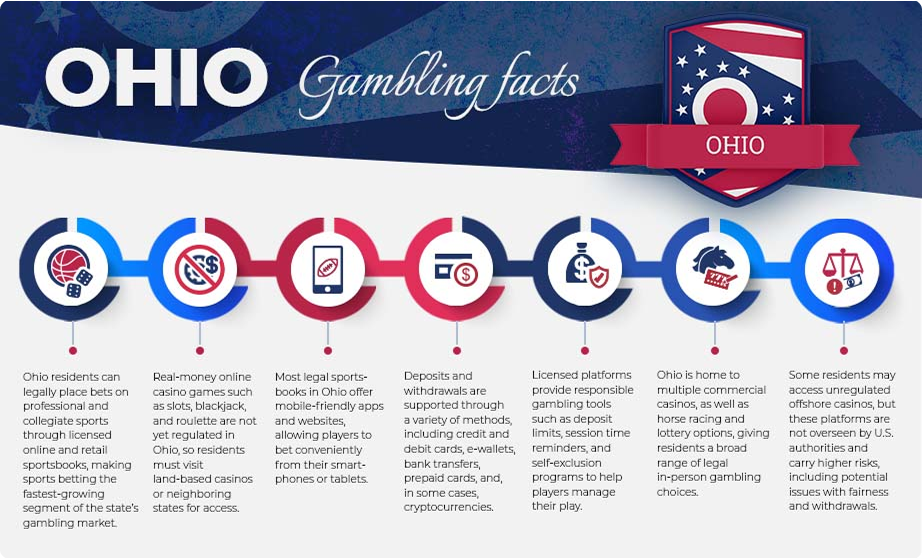
Ohio residents currently face a limited landscape when it comes to real money online casinos. While the state has legalized online sports betting and maintains a robust network of land-based casinos and racinos, full-scale online casino games such as slots, blackjack, roulette, or online poker are not yet authorized. Understanding the legal options and safe ways to play is essential for Ohio players.
Online Casinos in Ohio
At present, Ohio does not license or regulate real-money online casinos. Residents cannot legally access state-sanctioned platforms for traditional online casino games. While some sweepstakes-style or social casino platforms operate in a legal gray area, these sites are subject to strict federal and state laws, and players should exercise caution to ensure that they are engaging in legal activity and understand that these platforms do not provide the protections of regulated U.S. casinos.
Land-Based Casinos in Ohio
Ohio has a number of land-based casinos and racinos, regulated by the Ohio Casino Control Commission (OCCC). These venues offer a full range of gaming experiences, including slot machines, table games, poker, and video lottery terminals (VLTs). The OCCC ensures that all operations meet strict safety, fairness, and compliance standards, providing residents with a secure environment for traditional gambling.
Accessing Online Casinos in Other States
For traditional online casino games, Ohio players must look to neighboring states with fully regulated online casinos. States such as New Jersey and Pennsylvania allow residents physically present within their borders to access licensed platforms offering real-money slots, table games, and poker. Geolocation technology ensures compliance with state laws, meaning Ohio residents can only legally participate while physically in those states.
Offshore Online Casinos
Some Ohio players may consider offshore online casinos as an alternative. These platforms are not regulated under U.S. law, which introduces risks including unfair games, withdrawal difficulties, and lack of legal recourse. If opting for such platforms, players should research operators thoroughly, prioritize security, and understand the inherent legal and financial risks.
Who Can Play
All legal gambling in Ohio, whether online sports betting or land-based casinos, requires participants to meet the minimum age of 21. Online platforms and in-person venues verify age and identity to ensure compliance with state regulations.
The Bottom Line
While real money online casinos are not yet fully legal in Ohio, residents have access to secure land-based casinos and regulated online sports betting platforms. Neighboring states offer additional opportunities for online casino play, provided players comply with location requirements. Staying informed about Ohio’s regulations and exercising caution with unlicensed online platforms ensures a safer and legally compliant gaming experience for residents.
Top Real Money Online Casino Games in Ohio

Ohio residents interested in real money online casinos have options that are growing but still limited compared to some neighboring states. While the state has legalized sports betting at retail and online sportsbooks, full-scale online casino gaming is not yet widely available. Understanding what games are popular and how Ohio players can access them helps ensure a safe and enjoyable experience.
Online Slots
Slots are the most popular online casino games due to their simplicity and potential for large payouts. Ohio residents cannot currently play real-money slots through Ohio-licensed online casinos, but nearby states like Pennsylvania and West Virginia offer fully regulated platforms. These games range from classic three-reel machines to modern five-reel video slots with bonus features, free spins, and progressive jackpots.
Blackjack
Blackjack continues to be a favorite among online casino players for its combination of skill and luck. Players aim to reach a hand value of 21 without exceeding it. While Ohio does not currently offer online blackjack for real money, neighboring-state platforms provide multiple variations, including single-deck, multi-deck, and live dealer versions. These options allow players to practice strategy, make tactical decisions, and enjoy the interactive experience digitally.
Online Poker
Poker remains a highly competitive and strategic online casino game. Platforms in nearby legal states like Pennsylvania and West Virginia offer popular variants such as Texas Hold’em and Omaha. Players can join casual tables, compete in high-stakes games, or. participate in tournaments Live dealer poker is also available, providing Ohio players who travel or access licensed out-of-state sites with a more immersive experience.
Roulette
Roulette offers the thrill of the spinning wheel online. Players can bet on single numbers, groups, or colors, with variations including European, American, and French roulette. Licensed online casinos in neighboring states provide digital and live dealer versions, which stream real-time gameplay and replicate the excitement of a physical casino from home.
Baccarat
Baccarat is fast-paced and appeals to both casual players and high rollers. Players can wager on the “player” hand, the “banker” hand, or a tie. While Ohio does not yet offer online baccarat, regulated platforms in other states provide live and digital options, letting players enjoy the sophisticated gameplay that makes this game a staple in casinos worldwide.
Live Dealer Games
For Ohio residents who want a more social experience, live dealer games offer the closest simulation to a land-based casino. Real-time streaming allows players to interact with professional dealers and other participants while playing blackjack, roulette, baccarat, and poker. Live dealer platforms provide the excitement, atmosphere, and authenticity of traditional casinos without leaving home, though access requires being physically located in a state where these platforms are licensed.
Access Considerations for Ohio Players
Players in Ohio must be physically located in a state with legal online gambling to use licensed platforms. While Ohio’s online casino market is not yet operational, residents can travel to neighboring states or use regulated out-of-state platforms to play games legally. Offshore casinos may also accept Ohio players, but they carry higher risks, including lack of consumer protections, withdrawal issues, and potentially unfair games. Selecting reputable operators and understanding local restrictions is essential for safe play.
Best Ohio Online Casino Bonuses in 2026
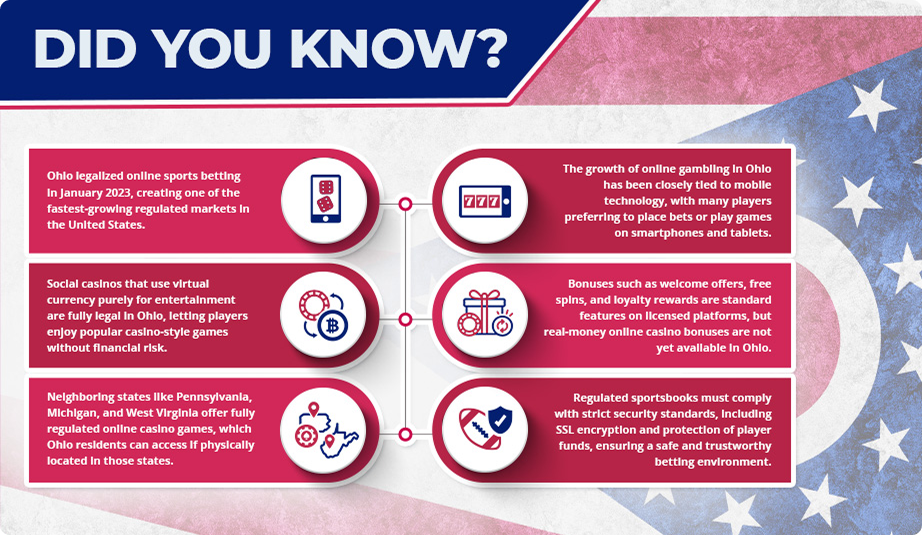
Ohio residents have access to a growing number of legal online gambling options, primarily through regulated sports betting apps and sweepstakes-style social casinos. While real-money online casino games are not currently legal in the state, promotions and bonuses in legal platforms are designed to enhance the gaming experience, extend playtime, and reward users. Understanding the different types of offers available helps both new and experienced players get the most value from Ohio-friendly gambling platforms.
Welcome Bonuses
Welcome bonuses are typically the first promotion new players encounter. These offers often match a percentage of your initial deposit, sometimes up to 100% or more, giving you extra funds to explore games like slots, blackjack, roulette, and poker. Many welcome packages also include free spins on popular slot titles, allowing you to test new games without risking additional money. These bonuses are a great way to get started and boost your initial bankroll.
No-Deposit Bonuses
No-deposit bonuses allow players to try an online casino without committing any funds upfront. These offers provide a small amount of bonus cash or free spins simply for signing up. Although the amounts are generally modest, no-deposit bonuses give Ohio players a risk-free opportunity to explore games, learn the platform, and even win real money before making a deposit. Always check the wagering requirements, as these promotions often come with specific rules for withdrawing winnings.
Reload Bonuses
Reload bonuses reward returning players when they make additional deposits. Typically offered as a percentage of the deposit, these bonuses can extend gameplay and provide extra chances to win. Online casinos often run regular reload promotions, giving loyal players ongoing value. Some reload bonuses also include free spins or other perks to make repeat deposits even more rewarding.
Free Spins
Free spins remain a popular option for slots enthusiasts. These promotions provide a set number of spins on featured slot games, often included in welcome packages, reload offers, or seasonal promotions. Winnings from free spins are usually subject to wagering requirements but provide an excellent way for players to explore new games and potentially hit significant payouts without spending additional money.
Cashback Offers
Cashback bonuses offer a percentage of net losses back to the player over a specific period, usually credited as bonus money or site credit. For example, a 10% cashback on a $100 loss would return $10 to the player’s account. These bonuses help soften the impact of losing streaks and provide extra security, allowing players to continue enjoying the games with added confidence.
Loyalty and VIP Programs
Loyalty and VIP programs reward regular players for consistent play. Points are earned on every real-money wager and can be redeemed for bonus cash, free spins, or exclusive perks. VIP members often enjoy benefits such as faster withdrawals, higher deposit limits, special promotions, and personalized account management. These programs provide long-term value and make regular gameplay more rewarding.
Deposits and Withdrawal Methods at Ohio Online Casinos

Players in Ohio can choose from a wide range of secure, fast, and convenient deposit and withdrawal methods to manage their accounts. Whether funding an account or accessing winnings, understanding the available options ensures a smooth and hassle-free experience. Most methods are compatible with both desktop and mobile devices, allowing players to enjoy seamless transactions on the go. Additionally, familiarizing yourself with processing times, fees, and limits can help optimize your gameplay and make managing your funds more efficient.
Credit and Debit Cards
Credit and debit cards remain one of the most popular ways for Ohio players to deposit funds. Major providers such as Visa and MasterCard are widely accepted, with deposits typically processed instantly so you can start playing immediately. Withdrawals to credit or debit cards are sometimes slower, usually taking a few business days, and some casinos may prefer alternative methods like e-wallets or bank transfers for cashing out winnings.
E-Wallets
E-wallets such as PayPal, Skrill, and Neteller are highly popular among Ohio online casino players. They offer fast and secure transactions, with deposits processed instantly and withdrawals often completed within hours. E-wallets also provide an extra layer of privacy since bank or card details do not need to be shared directly with the casino. Most licensed casinos support multiple e-wallet options, making this method convenient and reliable.
Bank Transfers
Bank transfers remain a trusted option for both deposits and withdrawals, particularly for larger sums. While deposits via bank transfer may take 1–3 business days, this method is highly secure. Withdrawals through bank transfers are reliable, though processing times can be longer than e-wallets or card payments. Many players prefer this traditional approach for its safety and consistency.
Prepaid Cards
Prepaid cards like Paysafecard and Play+ provide an alternative way to fund your casino account without linking a bank account or credit card. These cards are preloaded with a specific amount, allowing players to control spending while maintaining security. Play+ is particularly convenient because it can be used for both deposits and withdrawals, though most other prepaid cards are deposit-only. Always verify the card’s terms before using it as your primary payment method.
Cryptocurrency
Some Ohio online casinos also accept cryptocurrencies such as Bitcoin, Ethereum, and Litecoin. Crypto transactions can be faster than traditional banking methods, often with lower fees, and they provide enhanced privacy since personal financial information is not shared with the casino. However, cryptocurrency values are volatile, and not all platforms accept digital currencies, so players should confirm compatibility.
Mobile Payment Options
With the growth of mobile gaming, many Ohio online casinos support mobile payment solutions such as Apple Pay and Google Pay. These methods allow instant deposits directly from your smartphone or tablet, making them ideal for players who prefer gaming on the go. While availability is still expanding, mobile wallets are increasingly becoming a convenient option for Ohio players.
Where to Gamble for Real Money in Ohio
Ohio offers multiple legal ways for residents to gamble for real money, including retail sportsbooks, land-based casinos, and the state lottery. The state has established a regulated framework that ensures safe and secure gaming, allowing players to enjoy gambling with confidence. While online sports betting is legal and regulated, real-money online casino games are not currently permitted under Ohio law.
Mobile and Retail Sports Betting
Sports betting is fully legal in Ohio, both online and at physical locations. Mobile sportsbooks enable residents to place bets on professional and collegiate sports events directly from their smartphones, tablets, or computers. Retail sportsbooks located at casinos and racetracks offer an in-person experience for those who enjoy the energy of a physical betting environment. Ohio supports a broad range of betting markets, from major sports leagues to international events.

Land-Based Casinos
Ohio has several land-based casinos, including tribal and commercial properties. These venues offer a full range of table games, slot machines, poker rooms, and live entertainment. Poker tournaments, promotions, and other events provide both casual players and high rollers with ample opportunities to enjoy the traditional casino experience.
Horse Racing and Pari-Mutuel Betting
Horse racing is legal in Ohio, and pari-mutuel betting is available at tracks and authorized off-track betting facilities. Online racebooks also allow residents to wager on races across the country, making it convenient for horse racing enthusiasts to participate without visiting the track in person.
State Lottery
The Ohio Lottery offers draw games like Powerball and Mega Millions, instant scratch-offs, and select online ticket sales. Lottery games provide a fully legal, accessible way for residents to try their luck while contributing to state programs, including education and community initiatives.
Charitable Gaming
Charitable gaming is permitted in Ohio and includes activities such as bingo, raffles, and pull-tabs. These events are often run by nonprofit organizations to raise funds for local causes. While stakes are typically smaller than in casinos, charitable gaming offers a safe and enjoyable way to gamble while supporting community initiatives.
Offshore Online Casinos
Although some offshore online casinos may be technically accessible from Ohio, these platforms operate outside U.S. law and are not regulated. Using such sites carries risks, including potential legal issues, unfair games, and difficulties withdrawing winnings. Players are strongly encouraged to stick with, sportsbooks, and other regulated gambling options to ensure a safe and secure experience.
Essential Tips for Online Gambling in Ohio
Online gambling in Ohio is growing rapidly, with sports betting fully legal and online casinos. expected to followWhether you’re new to betting or an experienced player, following these tips will help you enjoy a safe, responsible, and fun gaming experience.
Play Only at Licensed and Regulated Platforms
Always use platforms licensed by the Ohio Casino Control Commission (OCCC) or partnered with Ohio-licensed casinos. Playing at regulated sites ensures fair games, secure transactions and protection of your personal and financial information. Avoid unlicensed or offshore platforms, as they operate outside Ohio law and may put your funds and data at risk.
Set a Budget and Stick to It
Before placing your first bet, decide on a spending limit that fits your comfort level and stick to it. Setting a clear budget prevents overspending and helps keep gambling fun. Avoid chasing losses—this is a common trap that can lead to financial problems. Many licensed Ohio platforms offer deposit limits and time-management tools to help maintain control over your play.

Understand Bonuses and Promotions
Online sportsbooks and casinos may offer welcome bonuses, free bets, or deposit matches. Always read the terms and conditions carefully. Pay attention to wagering requirements, expiration dates, and eligible games or sports bets to ensure you can maximize these offers safely.
Practice with Free Games or Small Stakes
If you’re new to online gambling or a specific casino game, take advantage of demo versions or small-stakes play. This lets you learn the rules, practice strategies, and build confidence before committing larger amounts of real money.
Manage Your Playtime
Online gambling can be immersive, but it’s important to manage your time. Long sessions can lead to fatigue and poor decision-making. Set daily or weekly limits and take breaks regularly. If you feel stressed, frustrated, or tired, step away and return when refreshed.
Use Secure Payment Methods
When funding your account or withdrawing winnings, choose secure and trusted payment options such as credit/debit cards or e-wallets like PayPal or Skrill. Ensure the site uses SSL encryption to protect your sensitive data during transactions.
Don’t Chase Losses
Gambling should be entertainment, not a way to make money. Trying to win back lost funds often leads to larger losses. Stick to your budget, remain patient, and keep a clear head.
Use Responsible Gambling Tools
Ohio-licensed platforms provide tools to help you gamble responsibly, including deposit limits, time limits, and self-exclusion programs. If gambling ever feels problematic, use these tools to pause or limit your play and seek professional support if needed.
Pros and Cons of Online Gambling in Ohio
Online gambling in Ohio is growing rapidly, with sports betting fully legal and regulated through both online and retail sportsbooks. While real-money online casino games are not yet legal, residents still have access to a variety of gambling options. Understanding the benefits and potential drawbacks can help Ohio players make informed choices.
Pros
- Convenience:
Online sports betting allows you to place wagers from your computer, smartphone, or tablet. You can bet from home, at a café, or on the go, making it easy to enjoy gambling without traveling to a physical sportsbook.
- Regulated and Safe:
Licensed sportsbooks in Ohio are regulated by the Ohio Casino Control Commission (OCCC), ensuring fair play, secure transactions, and protection of your personal and financial information.
- Variety of Betting Options:
Online sportsbooks in Ohio offer a wide range of bets, including moneyline wagers, point spreads, parlays, futures, and live in-game betting. Players can bet on professional and collegiate sports events both in the U.S. and internationally.
- Bonuses and Promotions:
Many Ohio sportsbooks provide welcome bonuses, risk-free bets, and ongoing promotions. These offers can boost your bankroll and provide extra opportunities to win without additional financial risk.
- Responsible Gambling Tools:
Licensed operators offer tools like deposit limits, session time reminders, and self-exclusion programs to help players manage their gambling habits responsibly.
Cons
- Limited to Sports Betting:
Unlike states with fully legalized online casinos, Ohio currently does not offer real-money online slots, table games, or poker. Players looking for casino-style gaming must visit land-based casinos or consider offshore sites, which carry additional risks.
- Legal Restrictions:
You must be physically located in Ohio to place bets on licensed online sportsbooks. Attempting to gamble from outside state lines is illegal and may result in account restrictions or closure.
- Potential for Problem Gambling:
Easy access to online sports betting can make it difficult for some players to control wagering habits. Without self-discipline, it’s easy to overspend or chase losses.
- Withdrawal Delays:
While many sportsbooks process payouts quickly, certain withdrawal methods such as bank transfers or checks may take several business days, which can be frustrating for players seeking immediate access to winnings.
- Lack of Casino Variety:
For players interested in online slots, blackjack, roulette, or live dealer games, Ohio’s online gambling options are limited. Visiting land-based casinos or using unregulated offshore sites may be the only alternatives for these experiences.
Sweepstakes and Social Casinos in Ohio
Ohio residents have access to a range of online gaming options, but real-money online casinos are not currently licensed or regulated by the state. As a result, alternative platforms such as social casinos and sweepstakes-style sites are often discussed, though they are treated differently under Ohio law.
Sweepstakes-Style Casinos
Sweepstakes casinos typically operate using promotional currencies that may, in some cases, be redeemable for cash or prizes. These platforms are not regulated as gambling in Ohio and often rely on sweepstakes and promotional laws rather than traditional gaming statutes.
In Ohio, sweepstakes-style casinos that closely resemble real-money gambling—particularly those that allow players to purchase virtual currency that can be redeemed for cash or tangible prizes—may risk being classified as illegal gambling under state law, depending on how they are structured. Because legality can depend on specific operational details, players should be aware that these platforms operate in a legal gray area and do not provide the protections or oversight found in regulated gambling markets.
As a result, Ohio players should exercise caution when using sweepstakes-style platforms and understand that consumer protections, dispute resolution options, and regulatory safeguards may be limited or unavailable.
Social Casinos
Social casinos are generally considered legal in Ohio when they operate strictly for entertainment purposes and use virtual currency that cannot be redeemed for real money or prizes. These platforms allow players to enjoy casino-style games such as slots, blackjack, poker, and roulette without wagering real money.
Players may receive virtual currency through gameplay or optional in-app purchases, but any winnings remain virtual and have no real-world value. Because there is no opportunity to cash out, social casinos do not meet the legal definition of gambling and are widely accessible to Ohio residents as a risk-free form of online entertainment.
Key Takeaways for Ohio Players
While Ohio does not currently offer regulated real-money online casinos, social casinos provide a legal way to enjoy casino-style games without financial risk. Sweepstakes-style platforms, on the other hand, are not regulated in Ohio and may carry legal and consumer-protection risks depending on their structure. Players seeking real-money gambling within a regulated environment must rely on land-based casinos, retail sportsbooks, or state-licensed online sports betting platforms.

The Future of Online Gaming in Ohio
Ohio has a well-established gambling industry, including land-based casinos and regulated sports betting. While online sports betting and daily fantasy sports are already legal, the expansion into full online casinos remains a topic of discussion. As technology evolves and neighboring states continue to grow their digital gambling markets, Ohio’s online gaming landscape has strong potential for development.
Expanding the Legal Online Gambling Market
Currently, Ohio’s online gambling options are limited. While real-money online casinos are not yet permitted, the state could look to models from New Jersey or Michigan to create a regulated online casino market. Legalization could include popular games like slots, poker, blackjack, and roulette. A licensing framework would likely ensure that only secure and reliable operators can provide services, giving players a safe and trustworthy online experience.
Technological Advancements and Mobile Gaming
Mobile platforms are expected to be central to Ohio’s online gambling future. Most players prefer accessing games on smartphones or tablets, making mobile-first designs and seamless interfaces essential. Future innovations could include live dealer games, instant payout systems, AI-driven personalization, and enhanced security measures. As technology evolves, virtual reality casinos and biometric authentication may further enhance gameplay and safety.
Responsible Gaming and Player Protection
Player protection will remain a top priority as online gambling expands. Future regulations may require tools like deposit limits, session reminders, self-exclusion programs, and access to gambling addiction resources. Advanced monitoring systems using AI and data analytics could help identify risky behavior in real time, allowing interventions before problems escalate. Maintaining responsible gaming practices will be essential to ensure a safe and entertaining environment for all players.
Economic and Market Implications
Legalizing online casinos in Ohio could create significant economic benefits. Potential outcomes include new tax revenue, job creation in technology and customer support, and growth in tourism as players from nearby states engage with Ohio’s market. A well-regulated online gambling industry could attract investment, encourage innovation, and position Ohio as a strong competitor in the regional digital gaming landscape.
Challenges and Considerations
Despite the opportunities, challenges remain. Lawmakers will need to balance revenue generation with concerns about gambling addiction and other social impacts. Building secure technological infrastructure and establishing clear regulatory guidelines will be key to creating a sustainable market. Ohio must ensure consumer protection while allowing the industry to grow responsibly.
Looking Ahead
The future of online gaming in Ohio is promising. With careful regulation, technological advancements, and a focus on responsible gambling, the state could expand its digital offerings significantly. While full legalization of online casinos may still take time, interest from players and policymakers suggests that Ohio’s online gambling landscape will continue to evolve in the coming years.
Ohio Online Casinos FAQ
Are online casinos legal in Ohio?
Currently, Ohio does not allow real-money online casinos. The state permits regulated online sports betting and daily fantasy sports, but full online casino gaming is not yet legal. Residents must wait for potential future legislation before accessing licensed online casinos within Ohio.
Can Ohio residents play at out-of-state online casinos?
Ohio residents may technically access offshore online casinos, but these platforms operate outside U.S. law and carry significant risks, including unfair games, lack of regulatory oversight, and potential legal issues. It’s safest to stick to platforms that are licensed and regulated in the U.S. once Ohio or nearby states legalize online casino gaming.
When might real-money online casinos become legal in Ohio?
There is currently no set timeline for legalization. Interest from lawmakers and the success of online gambling in nearby states like Michigan and New Jersey suggest that Ohio could explore legal online casino options in the coming years, but official legislation has not yet been passed.
What types of games could Ohio online casinos offer?
If legalized, Ohio online casinos would likely offer slots, blackjack, roulette, poker, baccarat, and live dealer games. Sports betting platforms already allow wagers on professional and collegiate events, and a licensed online casino would expand options for digital gameplay.
How can Ohio players stay safe when gambling online?
Players should use licensed platforms (once available) and take advantage of responsible gambling tools, such as deposit limits, time limits, self-exclusion programs, and support services for gambling addiction. Avoiding unregulated offshore sites is crucial to protect personal and financial information.
Are there online casino bonuses for Ohio players?
While no Ohio-licensed online casinos currently exist, future legal platforms will likely offer welcome bonuses, free spins, and loyalty rewards similar to other U.S. states. Players should carefully review terms and conditions, including wagering requirements, before claiming any bonus.
Can Ohio residents play social or sweepstakes casinos?
Yes, social casinos that use virtual currency purely for entertainment are legal in Ohio. Sweepstakes-style platforms that allow cash prizes may fall into a legal gray area or be prohibited, so players should ensure any site they use complies with state regulations.
Sources
-
LCB.org – For in-depth information on the latest online gambling news and updates, as well as casinos and sportsbooks available in Ohio.
-
Ohio Casino Control Commission (OCCC) – Official regulatory body overseeing casinos, sports betting, and other gambling activities in the state of Ohio.
-
Ohio Lottery – Official source for information on state lottery games, draw results, promotions, and responsible play in Ohio.
-
Ohio State Racing Commission – Regulatory authority for pari-mutuel horse racing, racetracks, and off-track betting in Ohio.
-
American Gaming Association – Provides information on gambling laws and regulations in the United States.
-
State of Ohio Government – Official source for Ohio laws, regulations, and legal information related to gambling and other state matters.